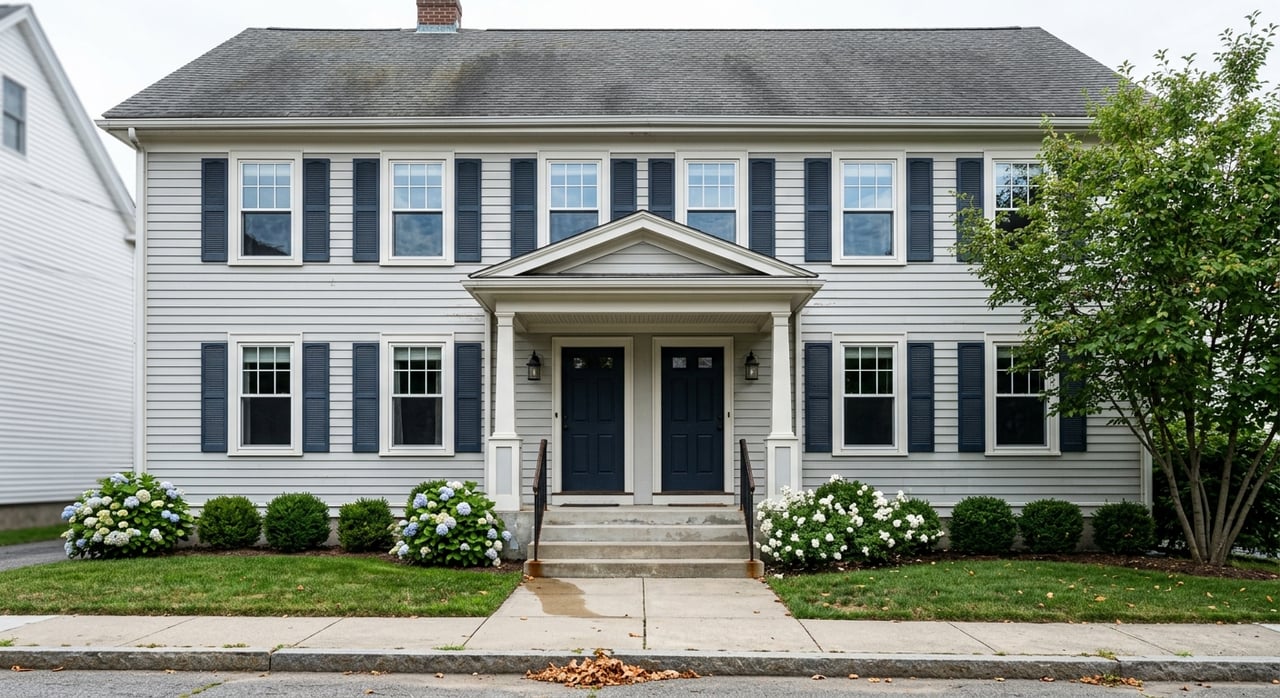
Are you wondering what your Bridgeport multi-family is really worth right now? Pricing an income property feels tricky because there are moving pieces: rents, vacancies, taxes, utilities, and cap rates. You want a clear number you can justify to buyers and lenders. In this guide, you will learn a simple, step-by-step way to price a 2 to 20 unit property in Bridgeport using the income approach, with practical checklists to back up your number. Let’s dive in.
What drives value in Bridgeport multi-family
Small multi-family buildings in Bridgeport are usually bought for income. Buyers look past the paint color and focus on rent potential, stability, and operating costs. Neighborhood, proximity to transit and employment centers, and coastal exposure can influence expected rents and cap rates. Taxes and insurance also carry real weight, so you want to verify them early.
Pick the right valuation approach
Income approach is primary
For income-producing buildings, the income approach is the main method. You convert a realistic net operating income into value using a market-derived capitalization rate. This is the number most investors and lenders will respect because it ties price to cash flow.
Sales comparison supports your pricing
Recent sales of similar small multi-family buildings help you pick an appropriate cap rate and validate your price. They are especially useful in neighborhoods with steady deal flow and consistent unit mixes. Use them to cross-check, not to replace your income analysis.
Cost approach is rarely the driver
Replacement cost minus depreciation is rarely the deciding factor for older, urban multi-family properties. It can serve as a reference when sales data is thin, but it usually does not set market price in Bridgeport.
Gather your documents first
Serious buyers and lenders will request clear financials. Pull these together before you price:
- Current rent roll and copies of leases
- Trailing 12 months profit and loss (T-12) and year-to-date P&L
- Property tax bills and assessment history
- Insurance policy and any claims history
- Utility bills for owner-paid utilities
- Invoices for recent repairs and capital improvements
- Certificates of occupancy, inspection reports, permits, and service contracts
- Unit photos, floor plans, and unit sizes
- Vacancy and marketing log, tenant ledger, and any eviction history
- Compliance items like lead paint, smoke and carbon detector proof, and any local rental registrations if required
Having this ready increases buyer confidence and reduces retrades.
Build your income picture
Start with the rent roll
List each unit with beds, baths, size, current rent, lease start and end dates, deposit, concessions, and who pays which utilities. Mark month-to-month versus fixed term. Use this to compute potential gross income and to flag below-market rents or upcoming turnover risk.
If long-term tenants are below market, create a simple as-stabilized rent roll that shows achievable market rent per unit. Support it with current local asking rents or rent surveys. Present both current and as-stabilized scenarios so buyers can underwrite risk appropriately.
Use a clean T-12
A T-12 shows the last 12 months of income and expenses by category. Include rental income, other income like laundry or parking, vacancy or credit loss, utilities, property management, repairs and maintenance, insurance, taxes, and professional fees. Separate capital expenditures from operating expenses so buyers can calculate a clean NOI.
Apply a vacancy and credit loss
Use either your consistent historical vacancy or a realistic market vacancy rate for Bridgeport. Make sure to include concessions and expected downtime between turns. The goal is an effective gross income figure that reflects typical operations, not a perfect month.
Add other income
If you earn income from laundry, parking, storage, or pet fees, include it. Show actuals from your T-12 and note any near-term improvements, like adding modern laundry machines or formalizing paid parking.
Estimate operating expenses correctly
What belongs in operating expenses vs. capex
Operating expenses include property taxes, insurance, owner-paid utilities, repairs and maintenance, property management, landscaping and snow, supplies, advertising, and legal or accounting. Exclude debt service and depreciation. Keep capital expenditures like roofs, boilers, or full kitchen remodels out of NOI. If helpful, annualize major capex or include a reserves line for buyer context.
Use an expense ratio as a sanity check
After tallying expenses, compute an expense ratio: total operating expenses divided by effective gross income. For small multi-family, expense ratios often fall in a broad 30 to 50 percent range, depending on property age, unit mix, and who pays utilities. Use your T-12 and local context to find the right level for your building.
Taxes and insurance matter in Bridgeport
Property taxes can be a dominant expense. Always confirm the current bill and assessment history. If an assessment appeal is possible, note it. In some areas near the coast, flood exposure can raise insurance costs. Verify your flood zone and confirm current premiums.
Calculate NOI and select a cap rate
Net operating income is your effective gross income minus operating expenses. Once you have NOI, you convert it to value using a market cap rate.
How to derive a market cap rate
- Collect 3 to 5 recent, arm’s-length sales of comparable Bridgeport multi-family buildings.
- For each, calculate cap rate as seller’s NOI at sale divided by sale price. If NOI is not published, carefully estimate using reported gross rent and a realistic expense ratio, and disclose assumptions.
- Adjust up or down for differences in condition, unit mix, location, and tenant profile. If you must pull comps from nearby Fairfield County or other Connecticut submarkets, add a reasonable risk adjustment to reflect Bridgeport specifics.
Direct cap valuation steps
- Step 1: Compute potential gross income by summing annual contractual rents.
- Step 2: Add other income such as laundry and parking.
- Step 3: Subtract vacancy and credit loss to arrive at effective gross income.
- Step 4: Subtract operating expenses to get NOI.
- Step 5: Value equals NOI divided by the selected market cap rate.
Example with placeholder numbers to illustrate the math:
- PGI: 6 units at 1,500 per month equals 108,000 per year
- Other income: 3,000 per year
- Vacancy and credit loss: 6 percent of PGI equals 6,480
- Effective gross income: 108,000 + 3,000 − 6,480 equals 104,520
- Operating expenses: 45 percent of EGI equals 47,034
- NOI: 104,520 − 47,034 equals 57,486
- If market cap rate is 7.5 percent, value equals 57,486 divided by 0.075 equals 766,480
Use your actual numbers. Then show buyers a sensitivity range at nearby cap rates so they see how price moves with risk.
Use GRM as a quick cross-check
Gross rent multiplier equals sale price divided by annual gross scheduled rent. It is fast and can be helpful when you have many nearby sales, but it ignores expense differences. Use it to cross-check your income approach, not to set price on its own.
When to use a DCF
If you expect meaningful rent growth, major renovations, or staged lease-up, a discounted cash flow model can capture timing and exit assumptions. Use an exit cap rate that reflects expected stabilization and market conditions.
Common adjustments buyers make
Buyers and lenders typically adjust your T-12 to normalize operations. Expect them to:
- Remove one-time income or expenses
- Convert owner-occupied units to market rent
- Reclassify capital expenditures out of operating expenses and annualize where appropriate
- Adjust payroll or management to market rates
- Normalize unusually high or low utilities or other line items
Getting ahead of these adjustments builds credibility and reduces surprises.
Bridgeport-specific considerations
Neighborhood variation
Bridgeport is heterogeneous. Neighborhoods like Downtown, Black Rock, North End, South End, and East End can show different rent levels and cap rate expectations. Transit proximity, access to I-95 or Route 8, and closeness to employment centers can support higher rents and lower cap rates. Support your rent assumptions with recent local evidence.
Local regulation and documentation
Confirm any rental registrations, certificate programs, or inspection requirements specific to Bridgeport. Make sure smoke and carbon detectors meet code, and keep permits and inspection reports handy. Clean documentation reduces buyer risk perceptions and supports price.
Quick checklist and pricing workflow
Use this simple path to your list price:
- Collect documents: rent roll, leases, T-12, tax and insurance, utilities, capex invoices, compliance certificates
- Build income: PGI, other income, and a realistic vacancy and credit loss
- Calculate expenses: include all operating items and exclude debt service and capex
- Compute NOI: EGI minus operating expenses
- Select cap rate: derive from local sales and adjust for your property’s specifics
- Value: divide NOI by the selected cap rate and present a sensitivity range
- Cross-check: compute GRM against recent sales to validate your range
- Prepare a seller packet: clean T-12, rent comps, capex list, and photos to support your price
Improvements that can lift price fast
Small, targeted upgrades can raise perceived value and support stronger rent assumptions:
- Clean and brighten common areas and exterior lighting
- Refresh turnovers with paint, durable flooring, and updated fixtures
- Standardize cosmetic upgrades so future rent lifts are easy to visualize
- Document utilities and meters clearly; individual metering where feasible can reduce owner-paid costs
- Address safety and code items proactively
- Organize system maintenance records and warranties
- Add or formalize ancillary income such as paid parking or modern laundry and track the results
Larger renovations can pay off when supported by achievable rent increases. Underwrite the cost versus rent delta before you commit.
How to present your price to the market
Buyers respect a price that is backed by clean numbers. Package your ask with:
- A simple summary of current and as-stabilized NOI
- The cap rate you used and a short sensitivity table at nearby rates
- A rent study supporting market rents
- A list of recent capital improvements and remaining useful life
- Notes on taxes, insurance, utilities, and any regulatory compliance
Transparency improves negotiation and helps you defend your value through inspection and financing.
Next steps
If you want a Bridgeport-specific pricing review, organize your rent roll, T-12, tax and insurance documents, and unit photos. From there, you can produce a supported NOI and cap rate-based value range. If you prefer a hands-on partner, I can help you assemble the packet, verify local rent and cap rate evidence, and position the property to attract serious investors.
Ready to price with confidence? Connect with Yasmina Delacruz-Bailey to request your free home valuation.
FAQs
How do I price a Bridgeport multi-family if my rents are below market?
- Build two scenarios: current income and an as-stabilized rent roll at realistic market rents with a vacancy allowance. Support the stabilized rents with local rent evidence and show timing and risk.
Should I use cap rate or GRM for a 3-family in Bridgeport?
- Lead with the income approach using cap rate because it reflects expenses and NOI. Use GRM only as a quick cross-check when you have many nearby comparable sales.
Do I include capital expenditures in NOI when setting price?
- No. Exclude capital expenditures from operating expenses. Either disclose them separately, annualize major items, or show a reserves line without mixing capex into NOI.
Where do I find reliable cap rate data for Bridgeport?
- Start with recent local sales, public records, and commercial listing services. Derive cap rates from those sales, then adjust for condition, unit mix, location, and lease profile.
How should financing affect my asking price?
- Market value is independent of your financing. Buyers will underwrite debt service for returns, but you should price based on market NOI and cap rates and present a defensible income approach.